Upright lens
Start with the card's direct, outward, or readily available expression. Ask where this quality is already visible and what constructive form it could take.
Tarot method guide
A useful reading is more than naming three card meanings. It begins with a clear question, observes the actual image, respects each spread position, and ends with a reflection that can be tested in ordinary life.
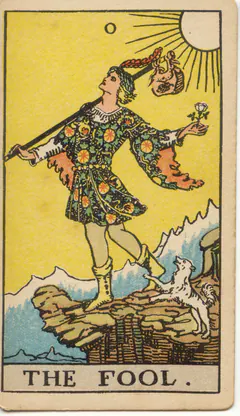
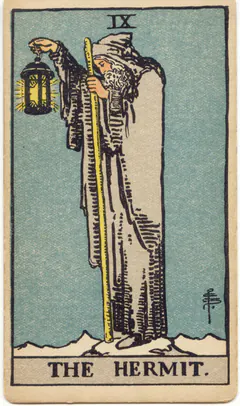
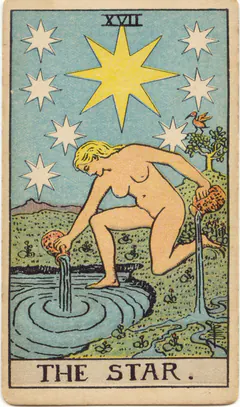
Image before keyword
Position before prediction
Relationship before repetition
Reflection before certainty
01 · Single-card practice
A single card is the clearest place to learn the difference between observation and interpretation. Slow the process down enough to notice where a conclusion came from.
Before opening a meaning list, identify figures, direction of movement, colour, landscape, objects, and the part of the image that first holds your attention.
Confirm the card identity and whether it is upright or reversed. Orientation changes the reading lens; it does not replace the image in front of you.
Use the card profile to understand its established symbolic field, then select only the parts that actually speak to the question and context.
Translate the reading into one question, observation, or small action. The aim is a useful next perspective, not a claim that the future has been fixed.
02 · Orientation
A reversal is not automatically the negative or exact opposite of an upright card. It can indicate energy that is internal, blocked, delayed, excessive, avoided, or asking for revision.
Start with the card's direct, outward, or readily available expression. Ask where this quality is already visible and what constructive form it could take.
Test several bounded possibilities—internalised, obstructed, overextended, absent, or being reconsidered—then keep only the lens supported by the image, position, and question.
Do not force a reversal to mean the opposite. The position and surrounding cards remain part of the evidence.
03 · Three-card synthesis
Three mini-readings placed side by side are not yet a synthesis. The reading becomes coherent when each card is read inside its position and the transitions between positions are made explicit.
Know what Past, Present, and Future—or Situation, Challenge, and Guidance—mean before seeing the cards. This prevents the position from changing to fit a preferred story.
The same card can function differently as a past influence, a present tension, or a future direction. Keep the card identity stable while changing only the contextual question.
Look for continuity, contrast, escalation, relief, repeated symbols, or a change of element and pace. State the relationship rather than repeating two definitions.
Use the final position to show where the pattern points or what response becomes possible. Treat it as a direction to test, not a guaranteed outcome.
Sibyl's named spread frames are presentation conventions. They never alter deck order, card identity, orientation, seeded drawing, or yes/no classification.
Compare the three named spreads04 · Asking well
Questions shape the quality of a reading. Open questions create room for pattern recognition and action; fixed yes/no predictions often flatten complex situations into certainty the cards cannot establish.
| Narrow or fixed | More useful frame |
|---|---|
Will this relationship definitely work? | What pattern is shaping this relationship, and what needs an honest response?Moves from guaranteed outcome to observable dynamics and choice. |
Will I get the job? | What should I understand about my position, challenge, and best next move in this process?Keeps the reading connected to preparation and action. |
What exactly will happen next month? | What emerging direction deserves attention over the next month?Uses time as a reflective boundary without pretending to forecast exact events. |
05 · Repeatable practice
A journal turns isolated readings into evidence about your own interpretation habits. Record enough context to revisit the reading without storing more personal information than you need.
Sibyl's current journal stays in local browser storage. Do not record information you would not want on this device, and avoid using Tarot in place of qualified medical, legal, financial, or safety advice.What did I notice before reading the keywords?
Which card-to-card relationship felt most relevant, and why?
What one action or observation will I test?
When I return later, what changed—and what did not?
06 · Method boundary
Tarot is presented here as a traditional symbolic and reflective practice. A careful method can make the reading more coherent; it cannot convert the cards into scientific measurement or guaranteed prediction.
Use a single card to practise observation before synthesis.
Open Daily Tarot →02Move from an image into symbolism, upright and reversed lenses, and practical reflection.
Explore the 78-card library →03Use a named three-card frame and follow the relationship between positions.
Begin a reading →