Major Arcana
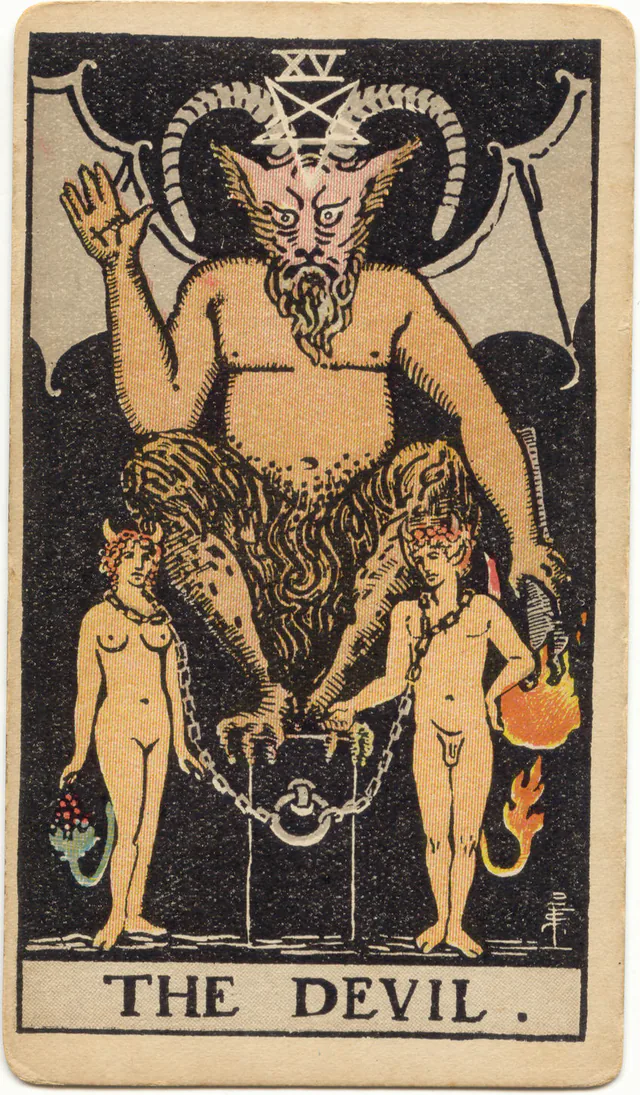
The Devil
- attachment
- compulsion
- shadow
- materialism
Deck position
16 of 78
Major Arcana card fifteen exposes attachment, compulsion, and the bargains through which appetite can narrow perceived freedom.
Browse Major ArcanaDeck family
Major Arcana: the deck's archetypal sequence
- archetype
- threshold
- transformation
- integration
Major Arcana cards are the un-suited cards of the Rider–Waite–Smith deck. Their Roman numerals and recurring figures create a visible sequence, but a reading does not have to predict a fixed destiny. The family is most useful as a vocabulary for consequential patterns, developmental turning points, and questions that reshape the frame of a situation.
How to read this family
When a Major Arcana card appears, first name the concrete image and the decision or threshold it suggests. Then ask whether the card describes the situation, the reader's stance, or a wider condition. In a multi-card reading, compare its scale with nearby Minor Arcana cards instead of treating it as automatically more important or more fated.
Visual symbolism
Look closely
A horned figure presides over two chained people whose loose collars imply constrained but recoverable agency.
An inverted pentagram, torch, tails, and fruit connect distorted desire with habits that feed themselves.
Traditional core
The Devil signifies binding attachments, disowned motives, and patterns sustained by reward, fear, or false necessity.
Upright meaning
Look directly at the bargain keeping the pattern in place; naming the reward is a first step toward greater choice.
Reversed meaning
Awareness may be loosening a bond, though relapse or denial remains possible; freedom grows through repeated accountable action.
Major Arcana
Reading workshop
How this card organizes meaning
The Devil organizes attachment through appetite, shame, power, and the stories that make constraint appear absolute. The loose chains, inverted symbols, and mirrored figures ask what is binding people and what participation keeps the bond in place.
How this card works in a spread
In a spread, examine incentives and dependency without moral panic. The card can reveal compulsive patterns and coercive arrangements, while also naming material desire or play that becomes harmful only when consent and choice disappear.
Questions to test the reading
What reward keeps this pattern active despite its visible cost?
Which constraint is externally enforced, and which is maintained through fear, habit, or secrecy?
What support or boundary would make one realistic act of choice possible again?
Relationships
Possession, secrecy, or dependency may be shaping the connection; distinguish desire from consent and care.
Work & career
Status, money, or urgency may be narrowing judgment; examine the incentive structure before blaming individual weakness.
Practical reflection
Write the hidden payoff, the real cost, and one practical way to make a different choice easier to repeat.
Method & source
Method version 1.0.0 · Content version 1.0.0
A. E. Waite, The Pictorial Key to the Tarot (1910) · Pamela Colman Smith, Rider-Waite Tarot illustrations (1909) · Independently authored and editorially reviewed